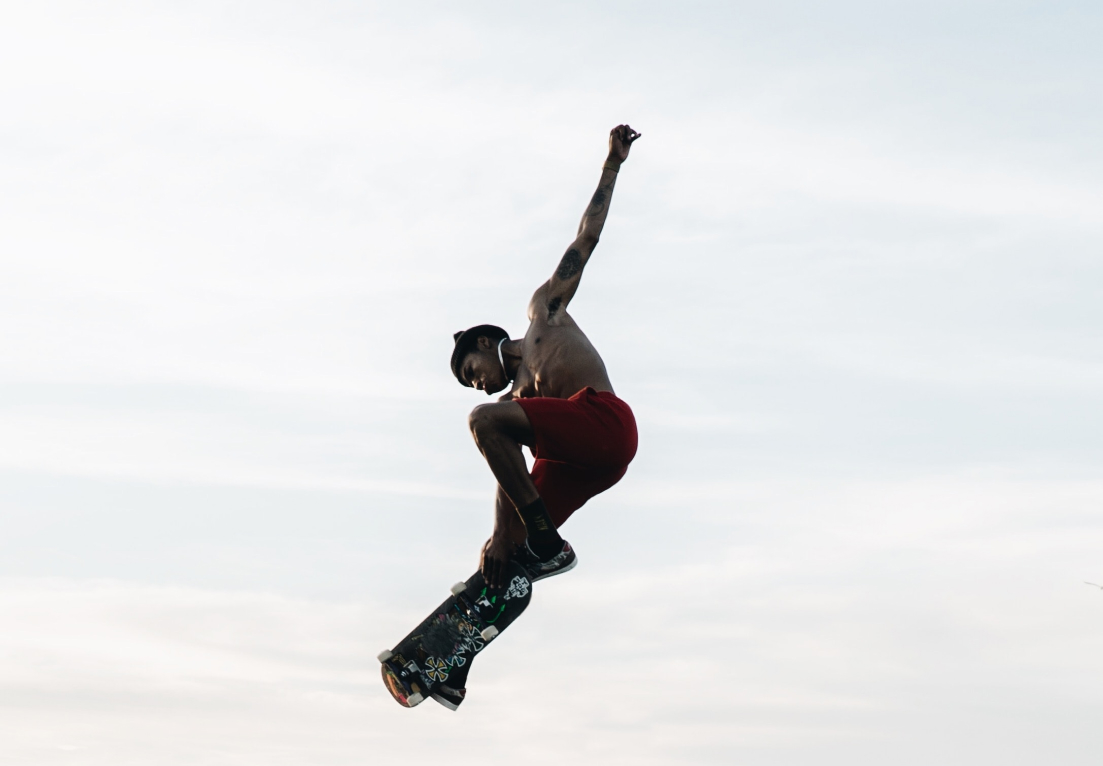
Turf is for skaters who want to challenge themselves, by providing a localized platform to promote friendly competition among the local skate community. No matter how big skating gets, the local scenes need support. TURF allows skaters to grow and compete.
Role: User Interface Design
Scope: Mobile
Time Line: 2 weeks
This was one of my first exercises in UI/UX, which sparked my interest in this field. I wanted to show my humble beginnings and consider how I could apply what I’ve learned over the course of my career to develop this project for the future. This exercise allowed me to reflect on my progress in user research.
Early on I conducted short interviews with New York City skateboarders to gauge interest, gather information on where they found their skatespots, learn some of their habits, and understand how they film and edit clips.
I received a lot of positive feedback around the concept at this time, and it gave me the confidence to execute the concept.
This game mode had multiple players skating obstacles around the map. Successfully landing a trick would change the obstacle to your color. The player who had the most spots in their color would win at the end of the round.
With smartphones and social media, I could adapt this familiar game mode to a mobile app to encourage skateboarders to push the limits of the urban landscape, and share their creativity.
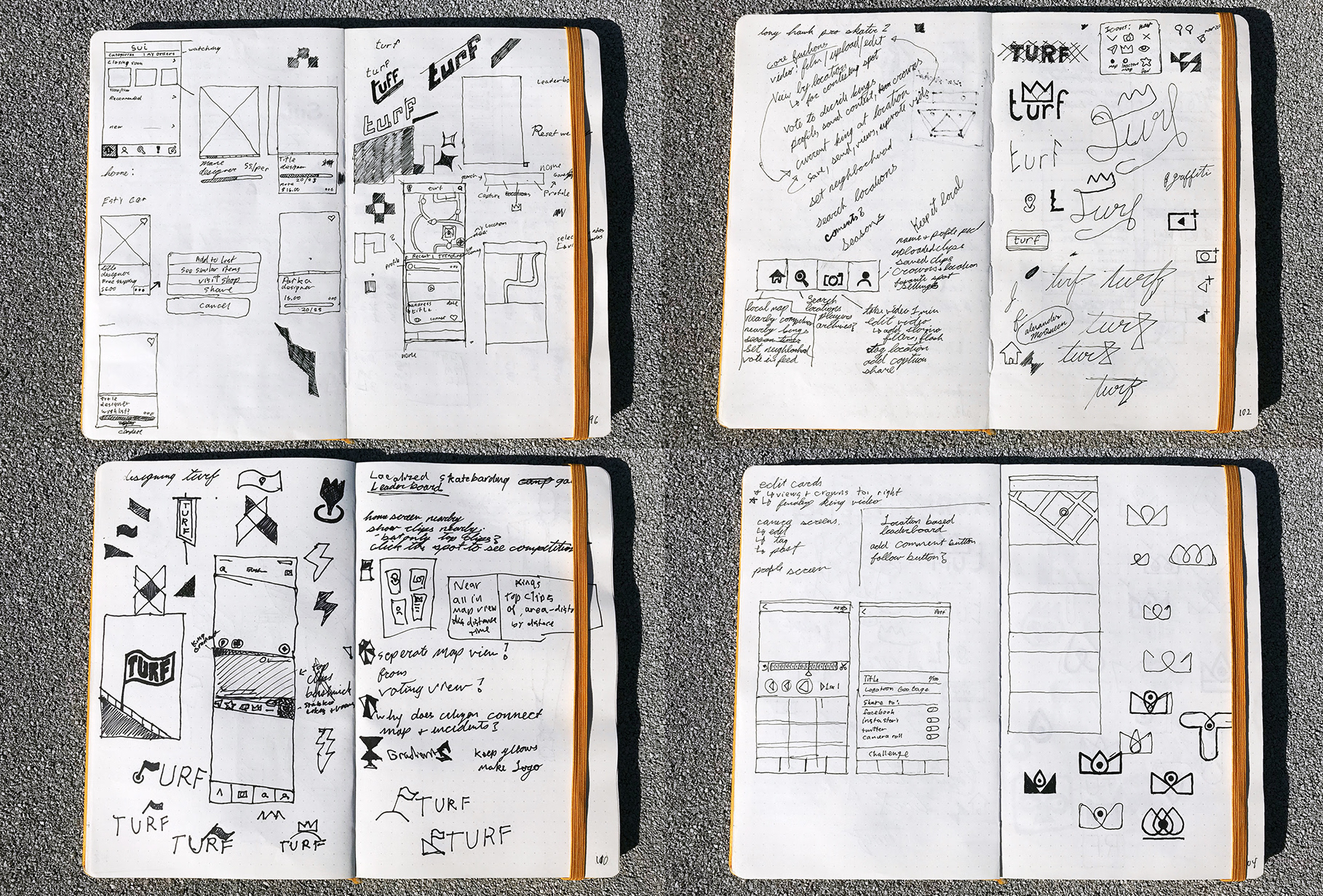
In my preliminary sketches, you can see me beginning to work though the interface. I also took some time to explore the branding, and settle on a name for this exercise.
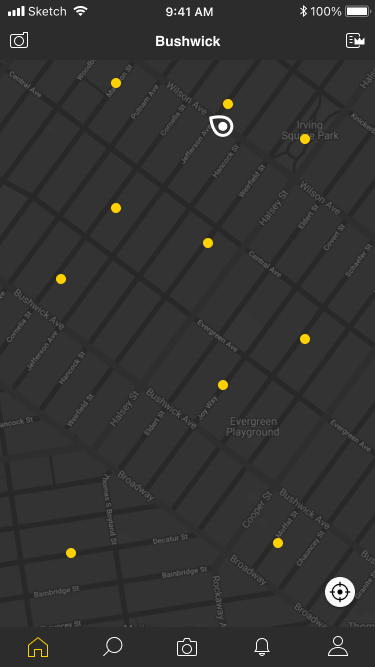
Split screen allows users to see what spots are being contested nearby or immediately dive into their feed. Users can pull down to fullscreen the map to view activity by location. The "best" clip is designated by the crown.
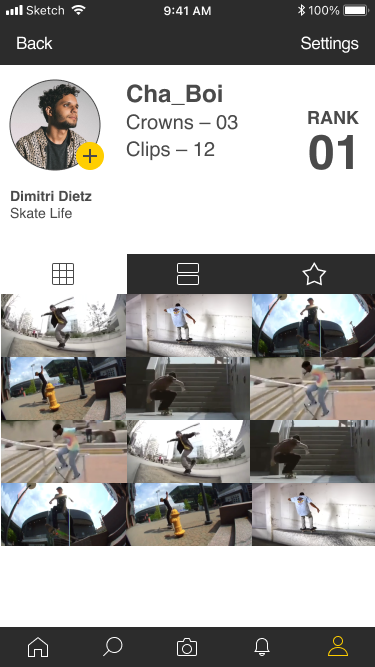
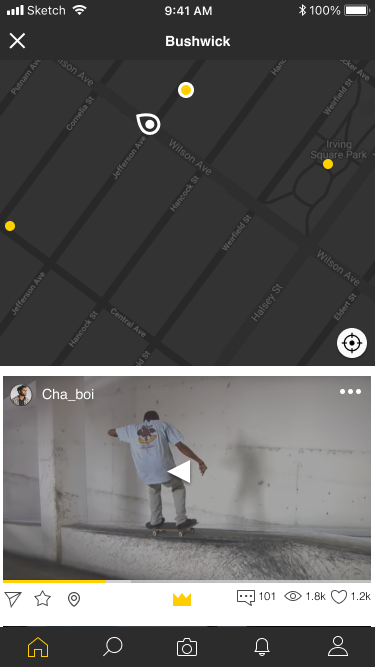
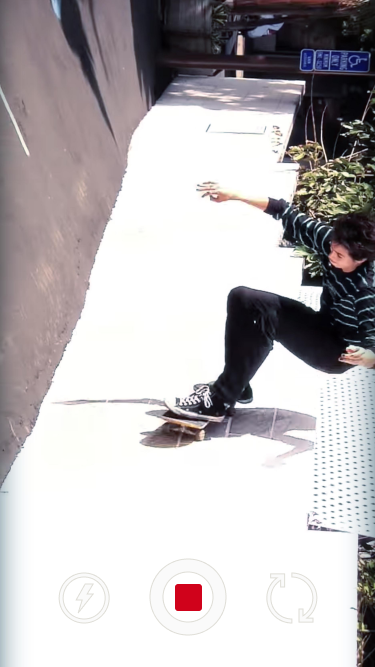
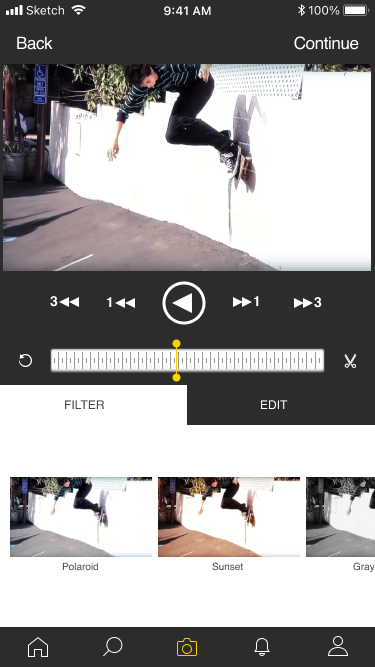
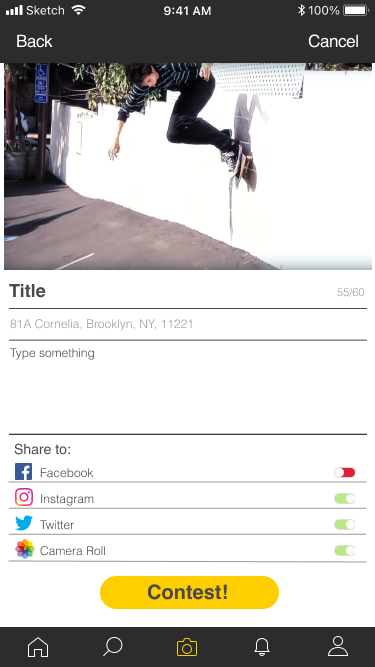
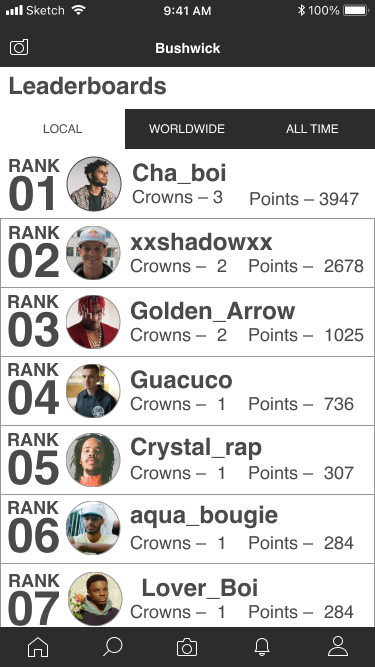
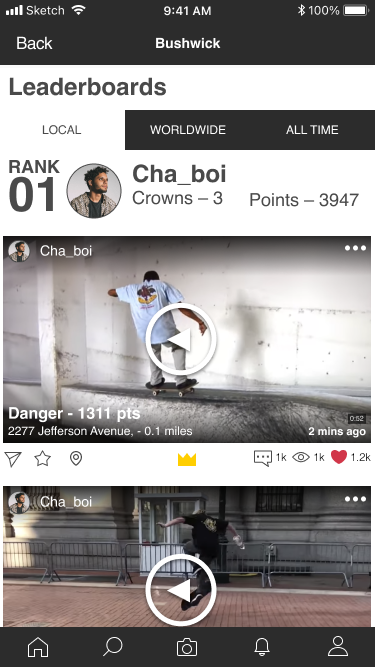
All of your clips are archived on your profile. Leaderboard placement is determined by crown totals. Tap any rank to see their winning clips and their turf. Challenge their turf and take their spot!
I created this project in 2018 when I was just beginning my journey into UX. This project allowed me to learn some industry tools, and introduced me to user centered design. Though this project has its flaws, I like the core concept of the app, and I’d like to outline how I would reapproach this project in the future.
While I did some preliminary research and usability tests, I didn’t ask the right questions. I approached this project with the intention of creating a localized skate competition, but I should also ask, is the competitive aspect welcomed by the community? I would like to conduct a competitive analysis between events like Streetleague, X Games and Glory Challenge.
I also recognize an opportunity for a landmarking app. Skateboarders find unique opportunities in the urban landscape and use these spaces to create. I’ve observed skateboarders will photograph a potential skate spot, and open Google Maps, to screenshot the location. There’s an opportunity to ease these pain points and create something valuable for skateboarders.
Finally, I’m curious how skateboarders think about filming their clips. Has the success of TikTok and the acceptance of vertical video, changed the way skateboarders prefer to film their clips? If landscape video is still preferred, maybe the entire app should be built around the horizontal screen position.
I’d need to do a lot of usability tests for an application with so many potential use cases. I’d love to dedicate time to exploring the video editing portion of the app by giving users a clip and asking them how they would attempt to edit the clip. I’d also like to test how users react to the split home screen. Would they know how to full screen the map, and how would they expect the feed to be ordered? One specific task I would ask a user to complete is to find a specific location on the map and view the activity at that spot.
I personally find this project inspired, and I’d love to apply my current UX toolkit, to develop and polish this concept. Stay tuned for updates!
Looking though this project, I realized how important it is to structure my research, and create artifacts about my process. A lot of the research happened during informal conversations and text messages.
I went into this project with an idea of what I wanted, and created that. Upon revisiting the process, I can see an opportunity to change the scope of the project to address a pain point that exists for skateboarders. This proves how important it is to me to make decisions based on research, instead of inspiration and assumptions.
